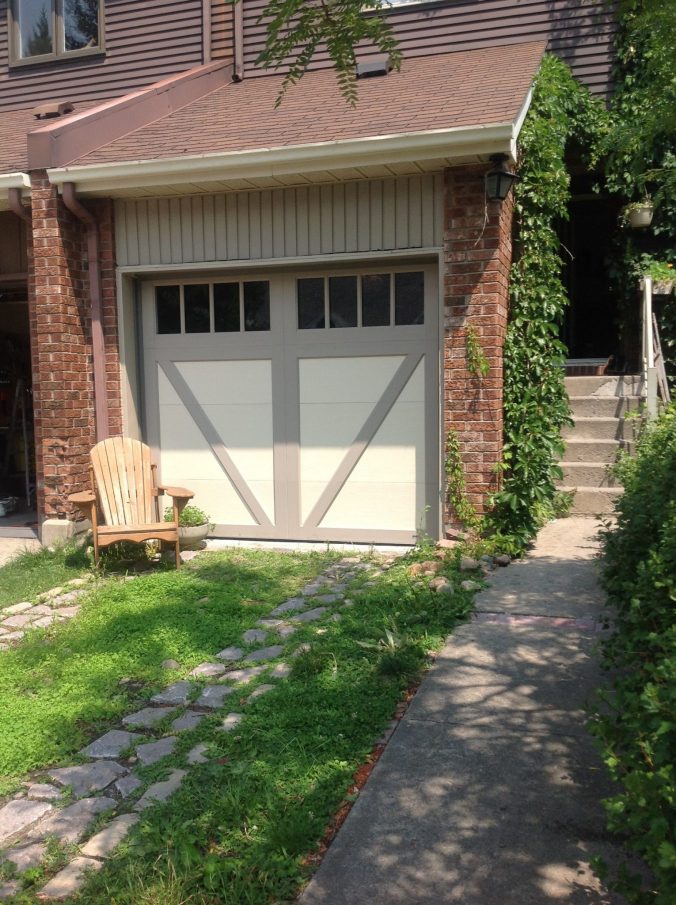
Well before the pandemic, I realized I was becoming a neighbourhood fixture, the person who sits on their front porch every day*, watching the world go by. I first started doing it outside, in an Adirondack (Muskoka) chair at what I called “1 Elation Way.”
* not every day, just often enough
I then moved the chair just indoors at the corner of the garage door, because I needed a tad more privacy while reading my books and papers and supervising the bunnies. (Also I was getting a bit too much sun, it’s not always pleasant to sit without shade.)
Since forever and anon, my garage looked like this:
It’s been on my to-do list for a few weeks to build a couple of bird houses with the scrap wood I have leftover from other projects, and so finally I did the job just in time for spring migration.
In fact, by May, it’s almost too late — except that some species breed more than once. Those birds who arrived earlier already have young, but those just arriving are getting ready to make a nest. A ready-made niche is often accepted — and that’s what I’m going to provide!
And so can you. Do it this weekend!
“Using Old Wood To Build A Birdhouse” is a into a new kind of post here called a Project or Portfolio post. I decided it this was a nice way to do it with a picture gallery, and I could centralize all the DIY projects that way. (It’s also been a hugely popular blog post).
Resource: NestWatch’s All About Birdhouses has everything you need to know about different birdhouses and nest boxes for different types of birds, and also how to set them up with a nest camera!
Cornell Lab of ornithology
Update: A necessary amendment to the bird houses
Portal protectors! These metal aperture guards keep other birds and animals from excavating the holes to the nest box, as happened to me late one fall because of a squirrel. I repaired the damaged sparrow row-house the following spring, like so, but also, the sparrows really like the new orientation of the end-cabin, and I’ve had successive families being raised in it:
The first portal was too destroyed, but that doesn’t prevent my changing it for the better!The sparrows absolutely love the new orientation, and I now have a flock that visit it year-round
I applied the same portal protector to the two bird houses I made for the above DIY project, and you can see the pics of the results there, too. You can buy them at this link (non-affiliate, I make no commission).
In 2025, we have the prospect of a fourth year of Chickadees raising a family in the chickadee box. They’re very discreet, until the nestlings get noisy.
We have the confirmed fourth year of noisy House Sparrow nestlings being raised in one unit of the multi-row-birdhouse sheltered above my own front door. They’ve successfully fledged every year!
And we have active House Sparrow nesting activity for the third year of the bird house on the corner of the back deck, which had previously seen at least one year of fledges.
Build your bird houses, naturalize their placement, and wait. The birds will come!
Formerly, this post was about ripening your green tomatoes, but I didn’t have much more than a social media slug to say about it — it was actually the shortest blog post I’d ever done. So if you still have tomatoes in the garden, they’re going to go to waste, unless you do this:
Pull up the plant in its entirety and hang it upside down in your garage or cold cellar.Continue reading
Acopian Bird Savers are a relatively inconspicuous (visible, but not unsightly) way to prevent bird crashes, guaranteed. They’re a light curtain of strings that wave in the wind, in front of your windows – so birds see the obstruction and don’t mistake the windows for trees or sky.
They have a Build-Your-Own tutorial on their website; if you need a more custom solution or just want the materials done right from the get-go, you can order it from them online.
It’s fairly easy apply decals and UV liquid (remember, these are only useful for some bird species, not all!) by leaning outside, cleaning the windows, and sticking them on, but the real fix — Feather Friendly — requires access and time to apply it properly. Feather Friendly is probably the most effective solution out there, and it’s meant to last. It’s easy to apply when you live on the ground floor, but not so easy at higher floors. But higher floors still need effective protection.
That means many apartment dwellers and homeowners who don’t have access to an extension ladder might find it too much trouble to try to prevent birds from crashing into windows. (Because they aren’t there when the crashes happen, or see what happens next, they doubt they occur, or that they’re serious enough to kill the bird. But…yes it happens and yes, it kills.)
I wrote this to help people who have either casement windows or modern sash-hung windows where you can tip the window inward in order to clean it (or pop the window out of the frame, as many can!). Sliding windows are even easier. You need to be able to access the top of the frame of the window on the outside. This DIY fix is super-affordable, and as it’s not a permanent alteration to the dwelling, you won’t need your landlord’s permission to use them.
This is a long-running “lifestyle” blog about the pleasures of living like a farm kid in an urban context. There’s a big focus on ecology and wildlife because this has brought me joy – and this is also the greatest potential we have of restoring some balance to nature where we live.
I write practical content for people to do little projects that basically make things beautiful, but also support climate readiness (energy efficiency, heat reduction, drought tolerance, flood prevention, and more). I’m a relentlless promoter of having a live-and-let-live attitude towards biodiversity.
Comments and questions are welcome! And if you’re anywhere near the Montreal region, you can also use my “Rewilding” service to landscape your property using native plants, convert to a green driveway, and prevent your windows from killing birds.